

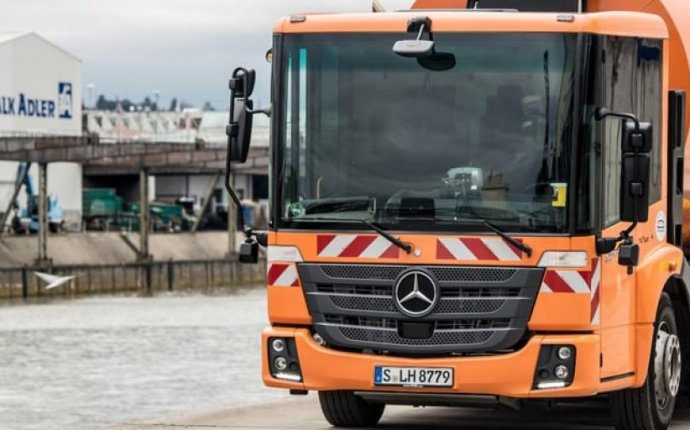
Green Garbage trucks
 "We've built the largest landfill-to-LNG plant in the world; this plant produces 13, 000 gallons a day of LNG, " says Jessica Jones, a landfill manager for Houston-based Waste Management. "It will take 30, 000 tons a year of CO2 from the environment."
Altamont is one of two California landfills making LNG; the other is a smaller facility about 40 miles south of Los Angeles. Other natural gas facilities are being planned by Waste Management at some of the 270 active landfills nationwide, and the number could grow quickly as communities seek to reduce greenhouse gas pollution.
In 2009, the US. Environmental Protection Agency counted 517 active landfill energy projects in the nation's approximately 1, 800 operational municipal landfills. That was up almost 50 percent from 2000, and 28 percent from 2004.
Landfills have plenty of the ingredients to produce methane. Bacteria break down the food scraps, paper, lawn trimmings and other organic waste dumped there. Over time, the material ferments, releasing methane and other gases. About 50 percent of the gas emitted from landfills is methane. It is 21 times more effective than CO2 at trapping heat in the atmosphere, the EPA says.
"Methane is the second most important greenhouse gas after carbon dioxide, " Tom Frankiewicz, program manager for EPA's Landfill Methane Outreach Program in Washington, says in an e-mail. "Methane is also the main component of natural gas, so by capturing and using methane as an energy source you get an even bigger bang for the buck."
At the Altamont landfill, seagulls hover over the sprawling complex, set among the rolling green hills and wind farms of the Altamont pass about 50 miles (80 kilometers) east of San Francisco. Dotted throughout the facility are more than 100 wells with black tubes that vacuum up methane from the heap.
The LNG is then pumped into the garbage and recycling trucks at a company fueling station in Oakland, while vehicles elsewhere in California get their gas at specially equipped stations.
The idea of turning garbage into clean energy is not a new one — the Altamont site has had a methane-fueled electric power plant since 1989 that can power 8, 000 homes a day. Hundreds of other landfills in the U.S. also use methane captured from rotting garbage for electricity projects.
In 2005, the last year data was available, landfill methane electricity projects made up 10.8 percent of the country's renewable energy output, not including hydroelectric power, EPA says.
Given its impact on greenhouse gases, four state environmental agencies contributed grants to help build the $15.5 million Altamont plant. Mike Beckman of Linde Group North America, the company that built and runs the natural gas plant, says the Altamont plant should continue producing fuel for 20 years or more.
That makes the nascent Altamont plant potentially profitable, as the gas is sold to Waste Management and other customers.


